
The Garden of Earthly Delights or The Damned Yard
Transformation of the anahata
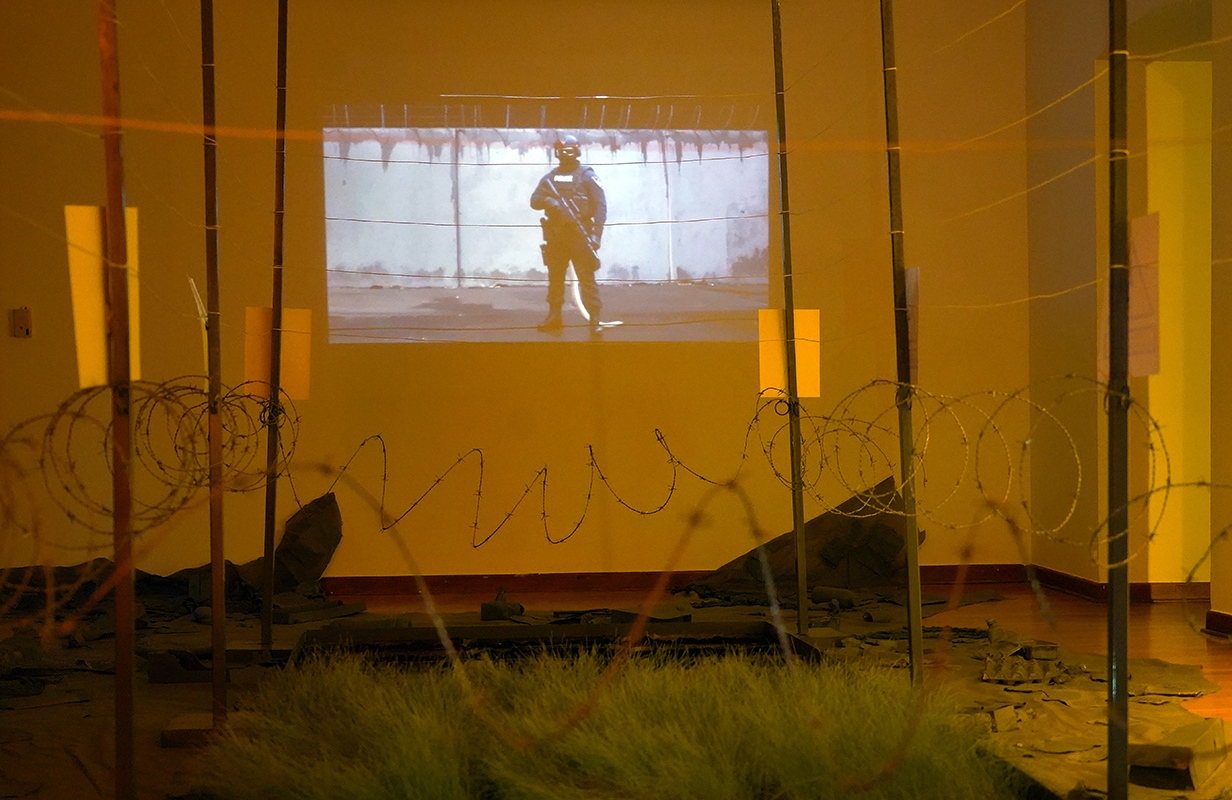
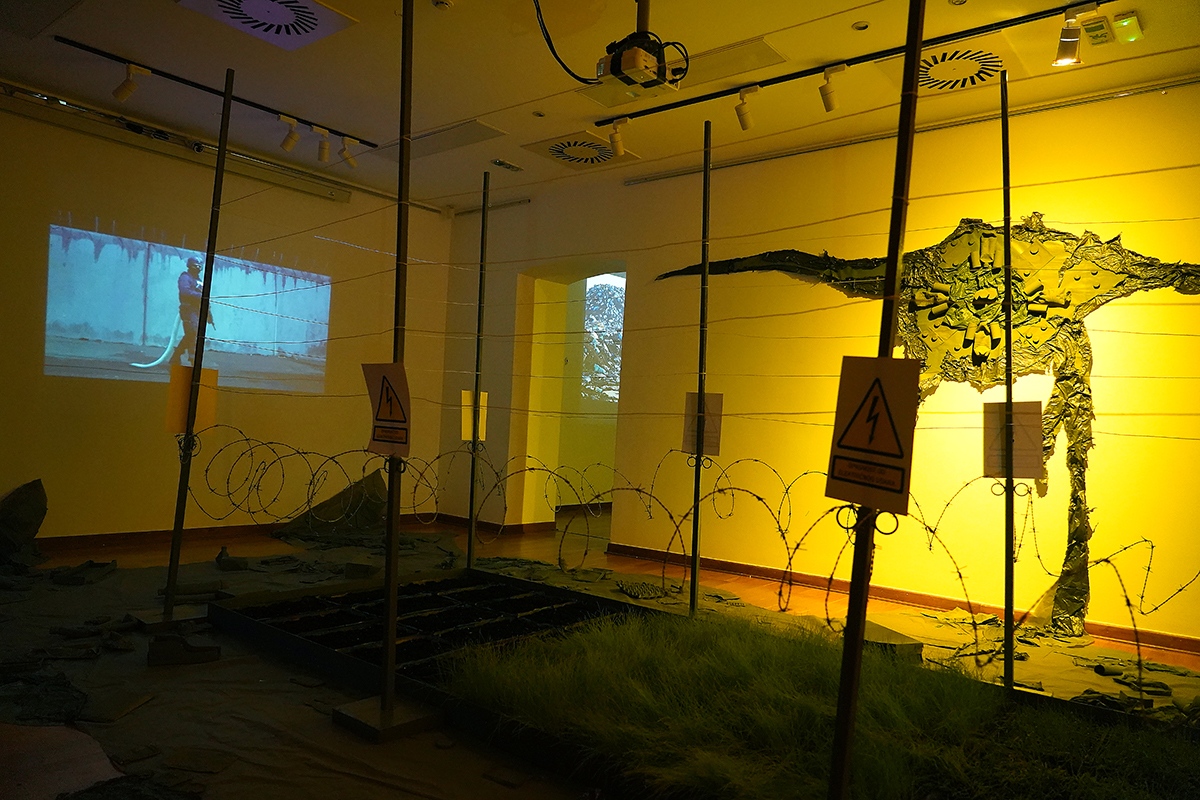
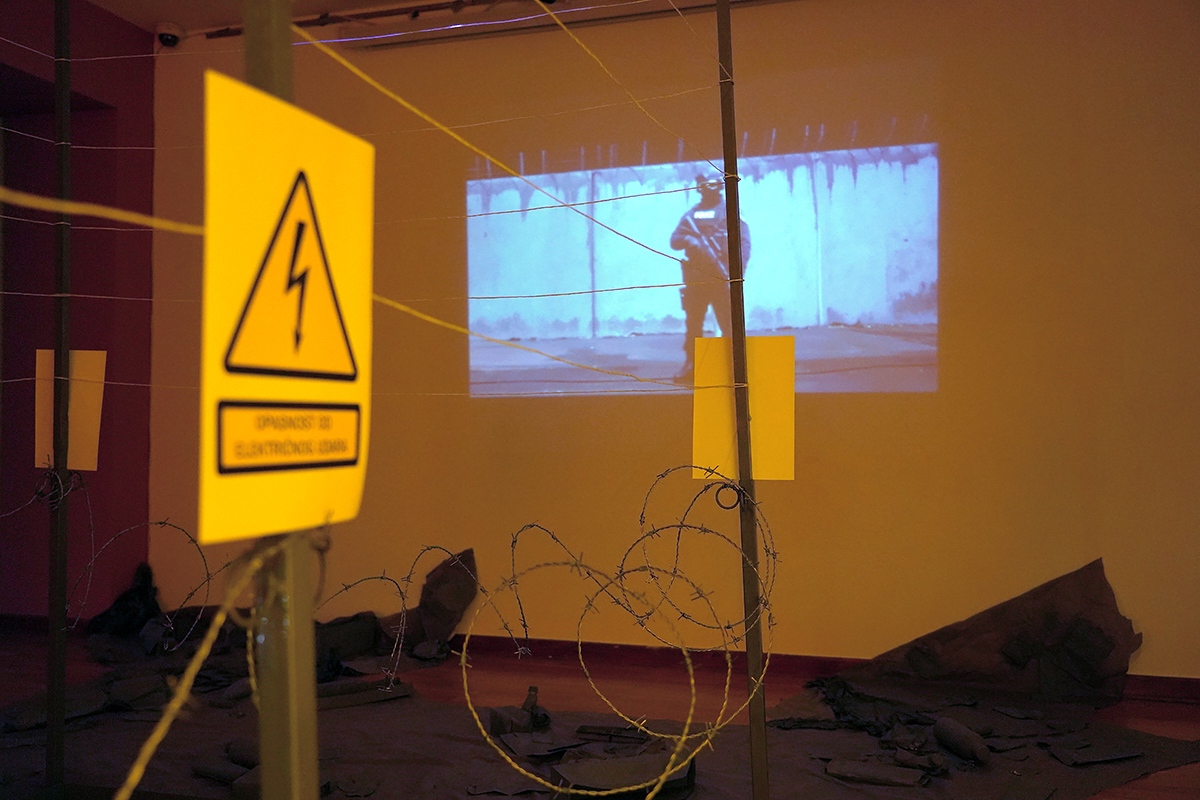
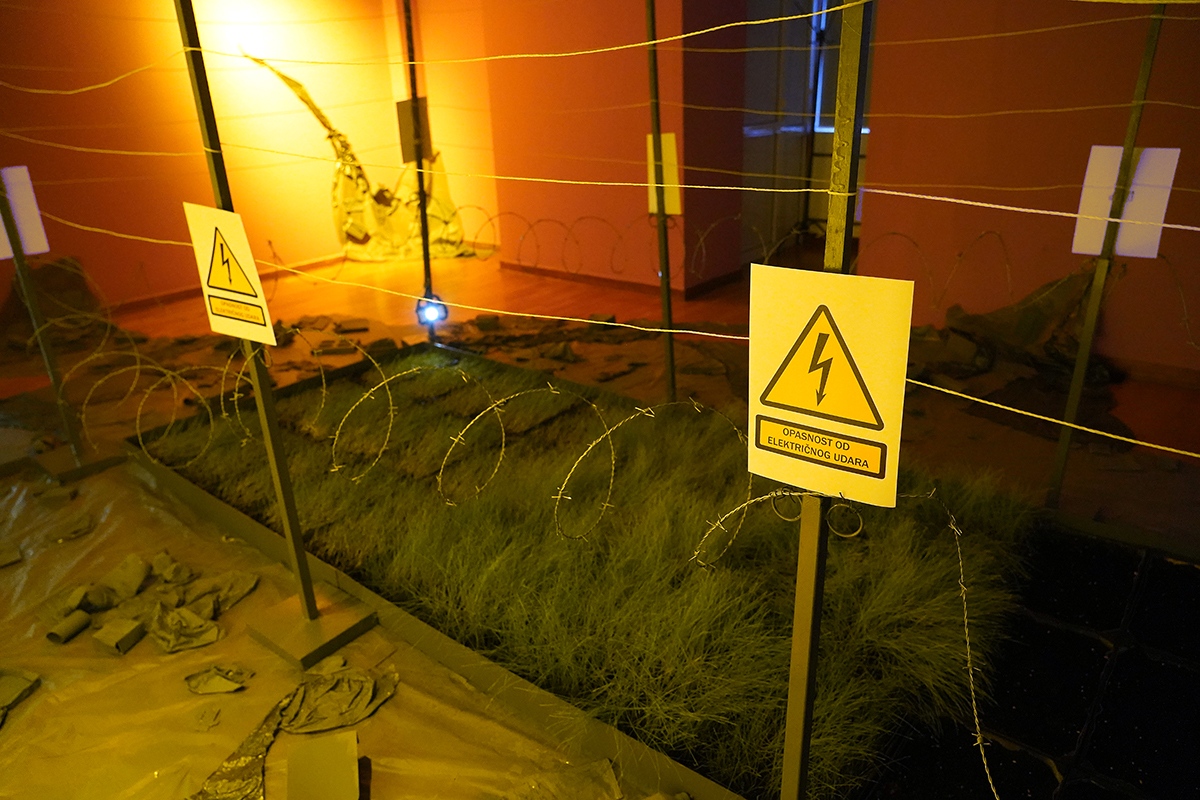


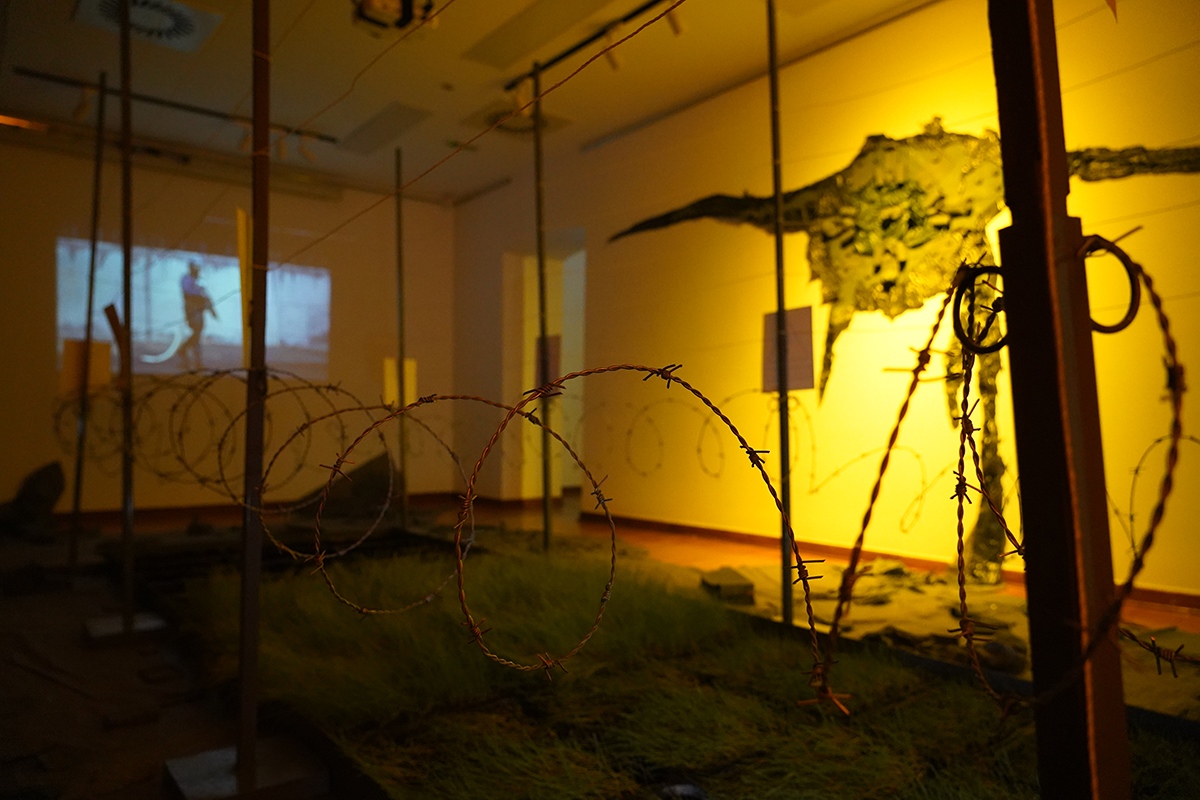
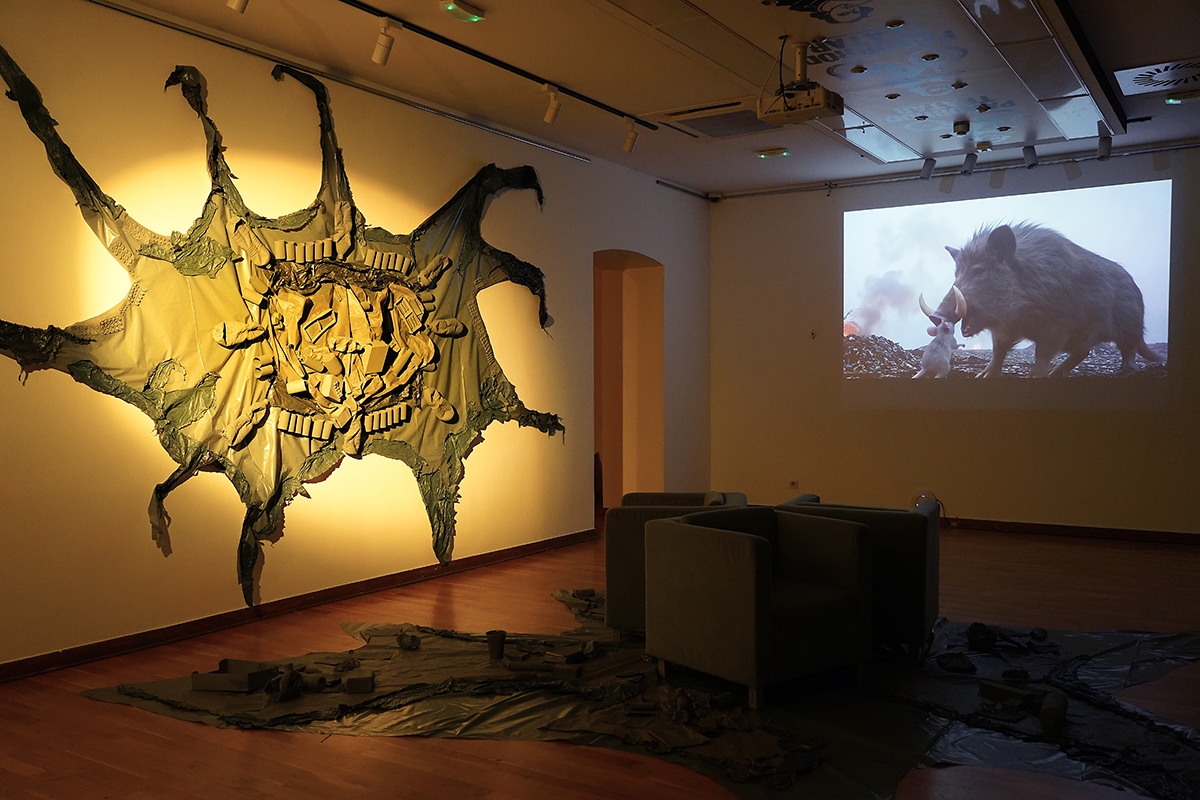
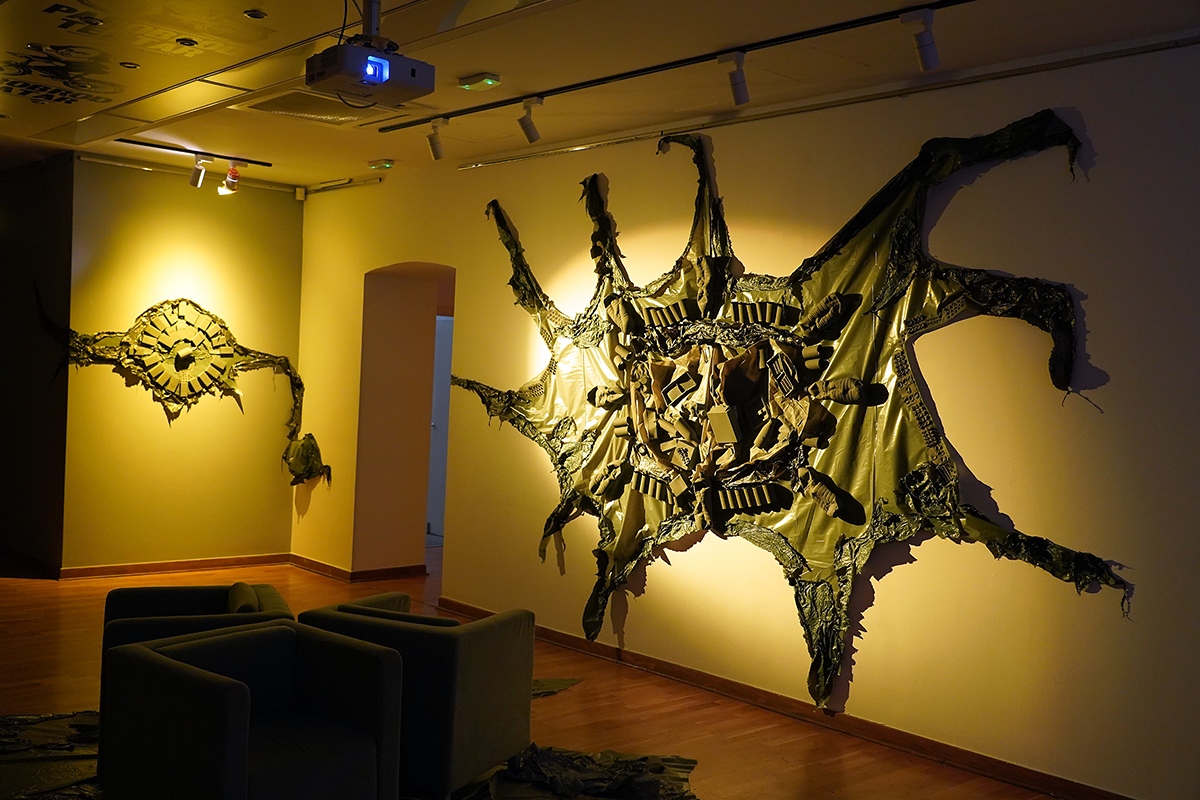

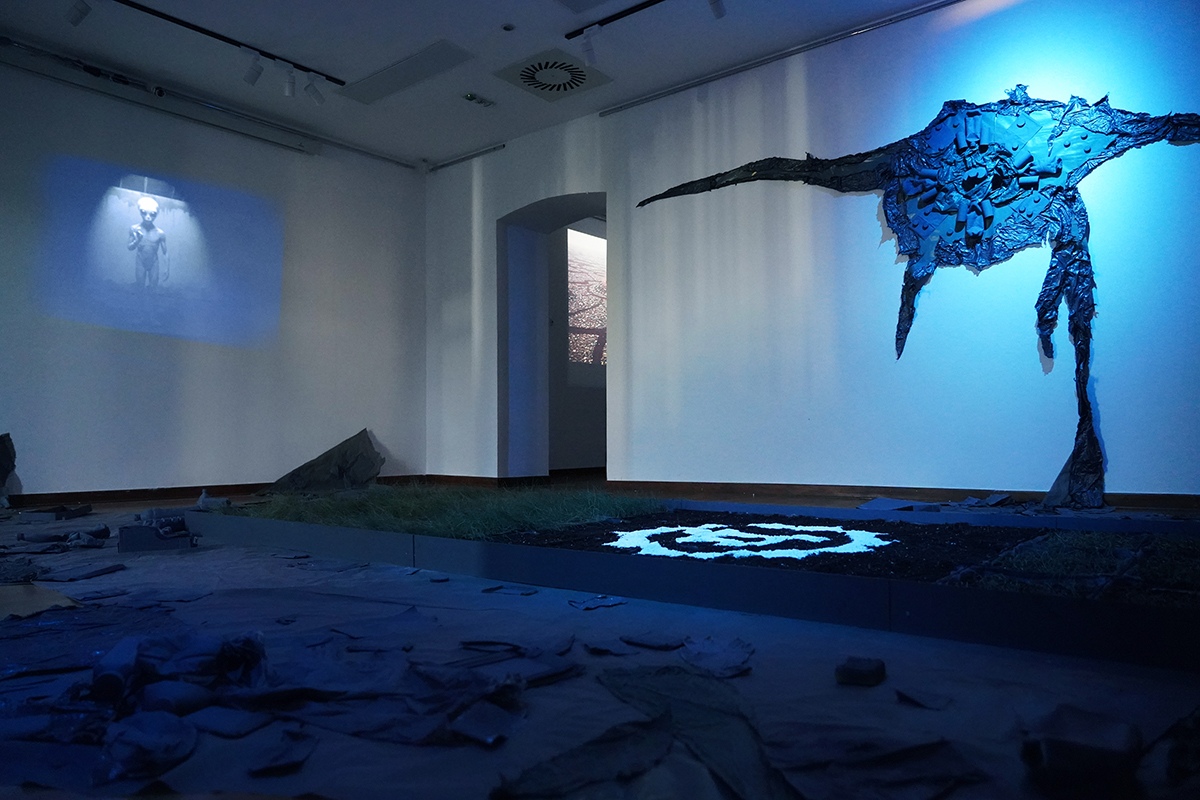
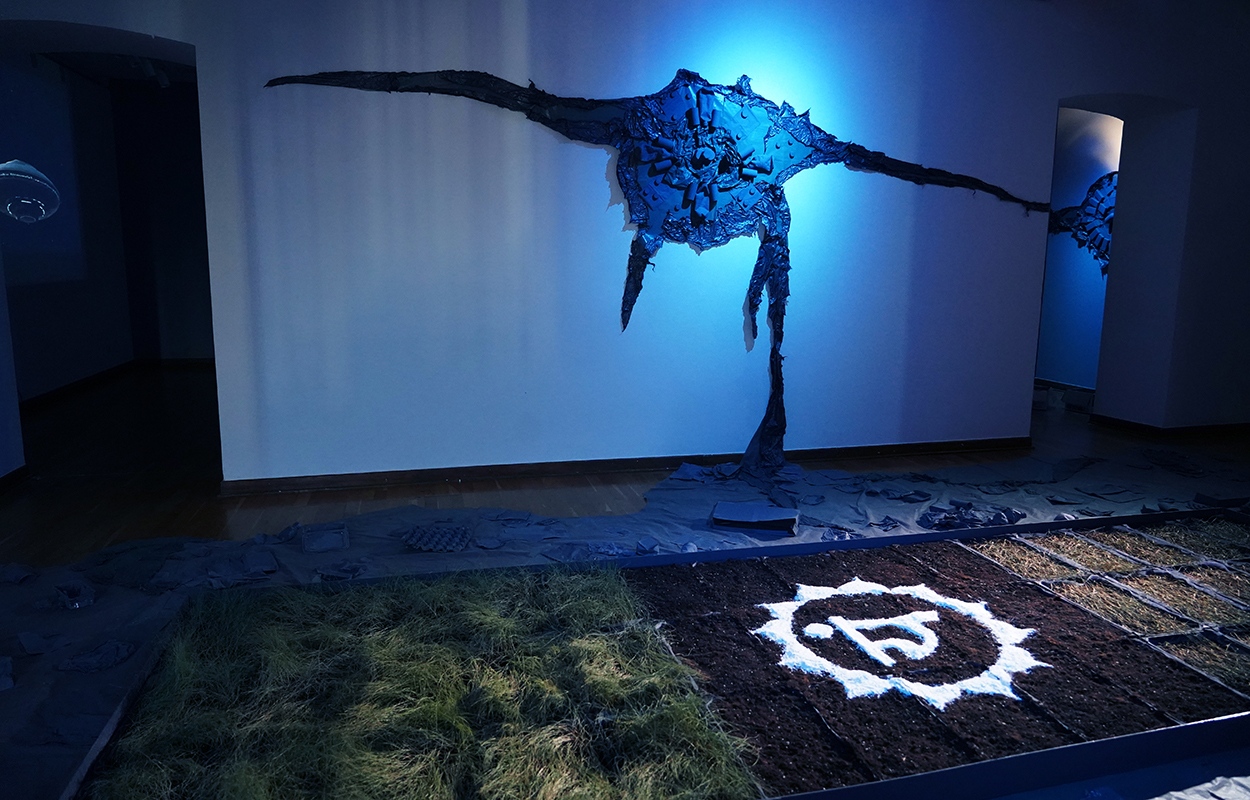
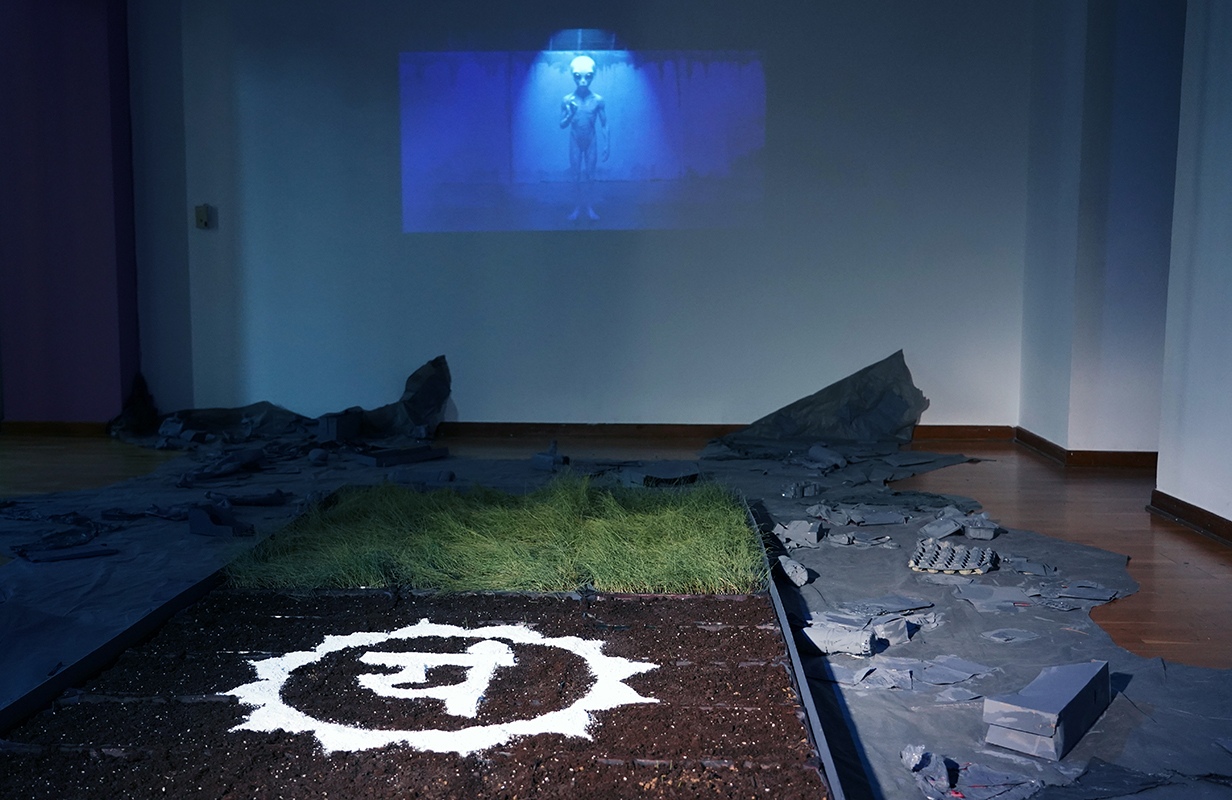

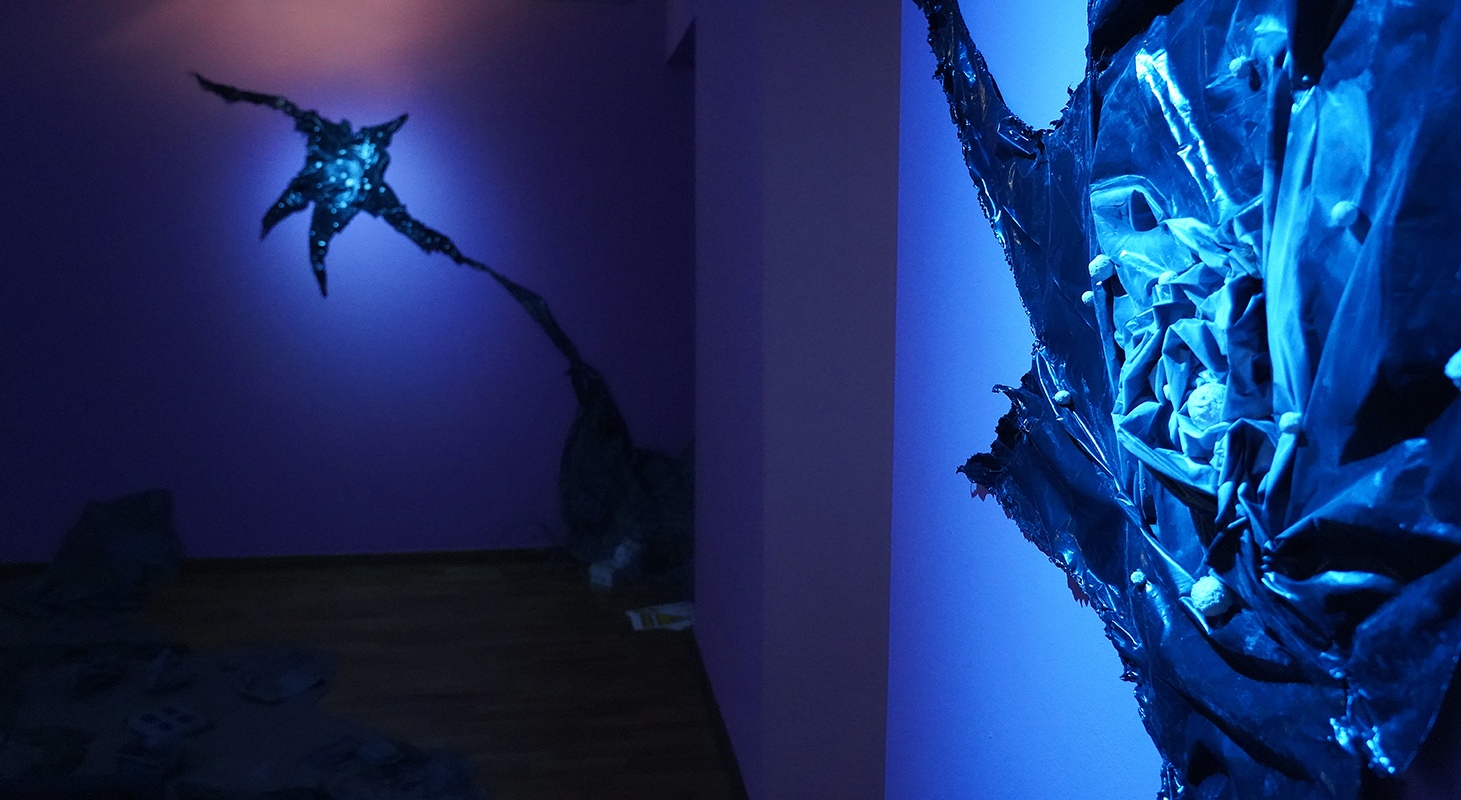
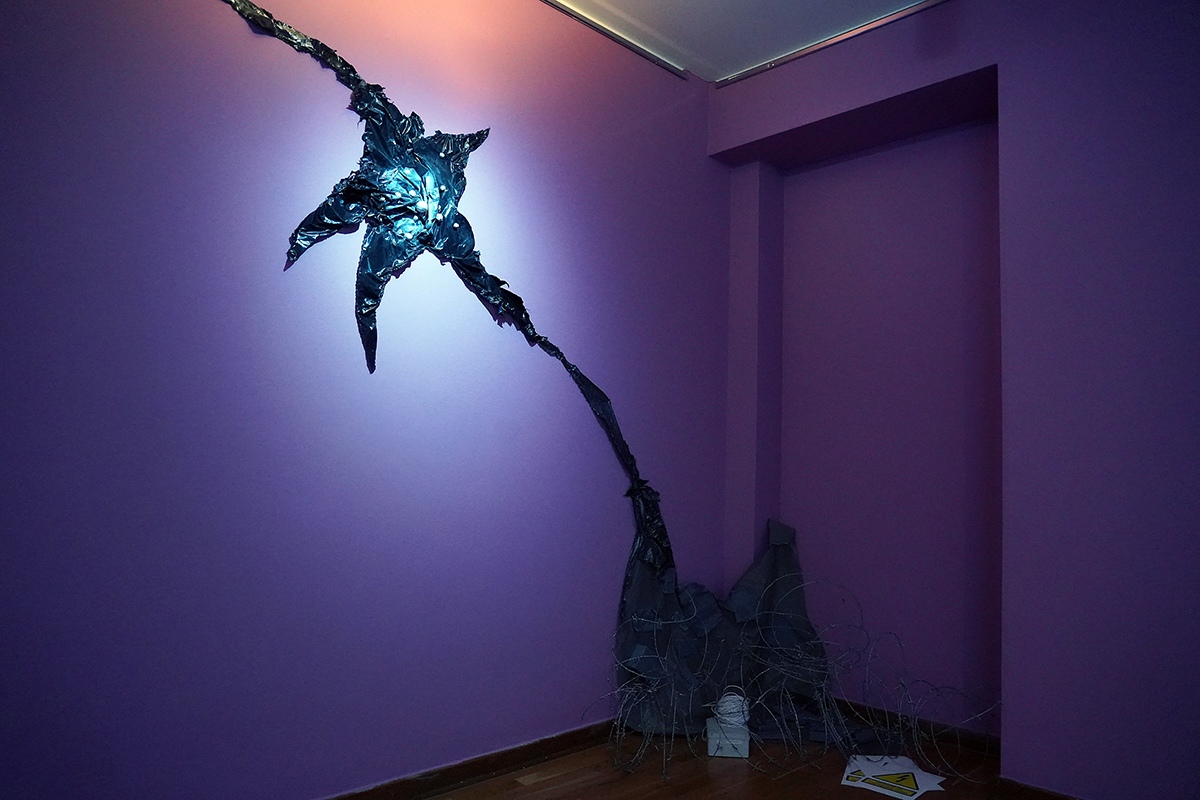

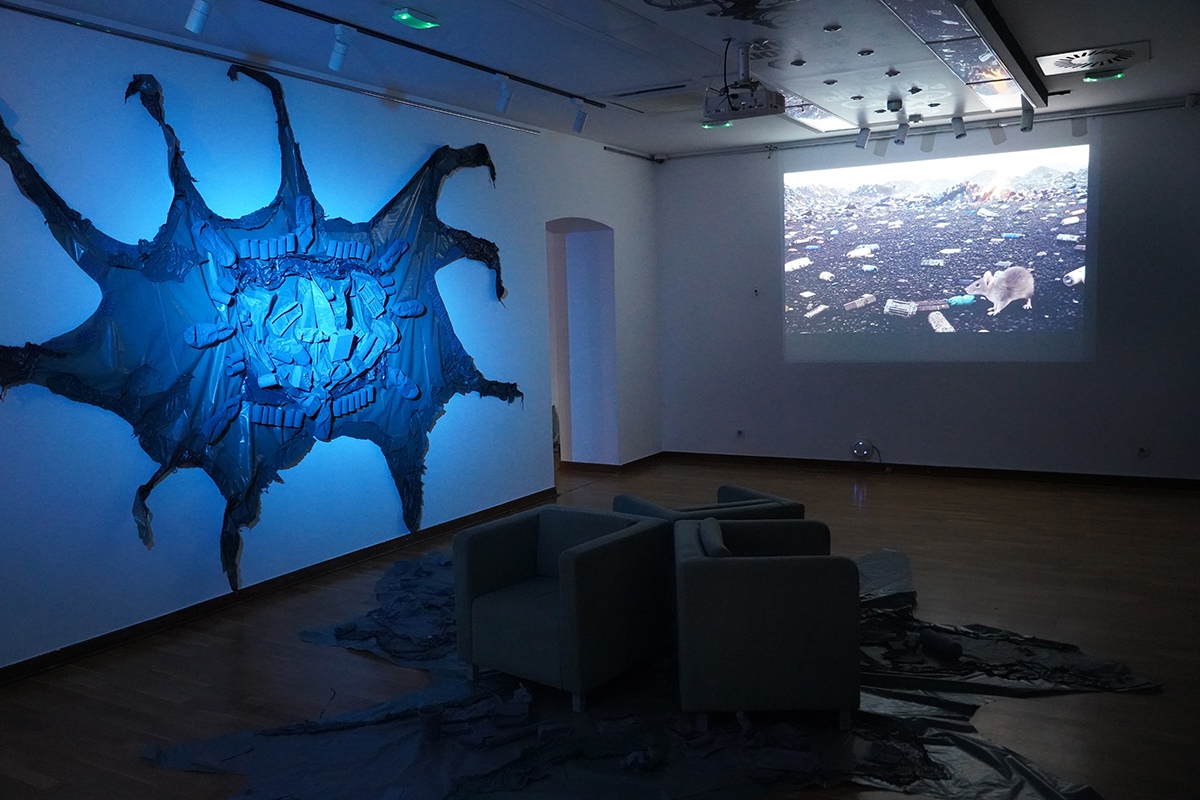
Expanding the narrative established in “The New Segregation”, the project “Transformation of the Anahata” translates its fictional world into a spatial experience. Waste proliferates beyond the landscape to engulf the exhibition itself, while fenced agricultural zones, surveillance technologies, and AI-generated animations evoke a society defined by exclusion, control, and competition over diminishing resources. Midway through the exhibition, the installation changes overnight: the barriers disappear, an alien presence replaces the surveillance figure, and an Anahata symbol is left imprinted in the field. This unexpected intervention interrupts the logic of control and introduces the possibility of another order.
Inspired by the symbolism of the heart chakra (Anahata), the project proposes empathy as a transformative force that can reshape relationships among humans, technology, and the natural world. The alien, holding a mudra reminiscent of Christ, functions as a metaphor rather than a literal visitor. It embodies an empathy elevated beyond contemporary human experience, suggesting that only a radically expanded capacity for compassion and coexistence could enable us to resolve the ecological and social crises of our time.
The Garden of Earthly Delights or The Damned Yard
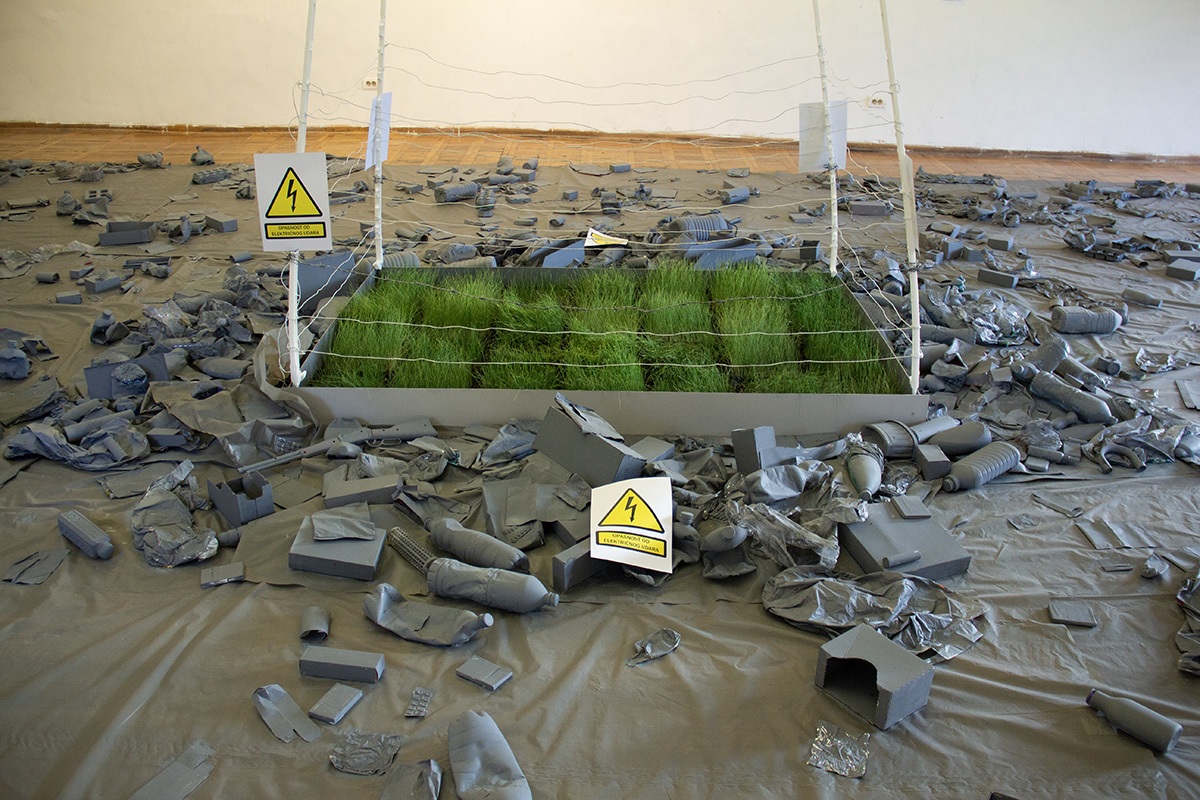
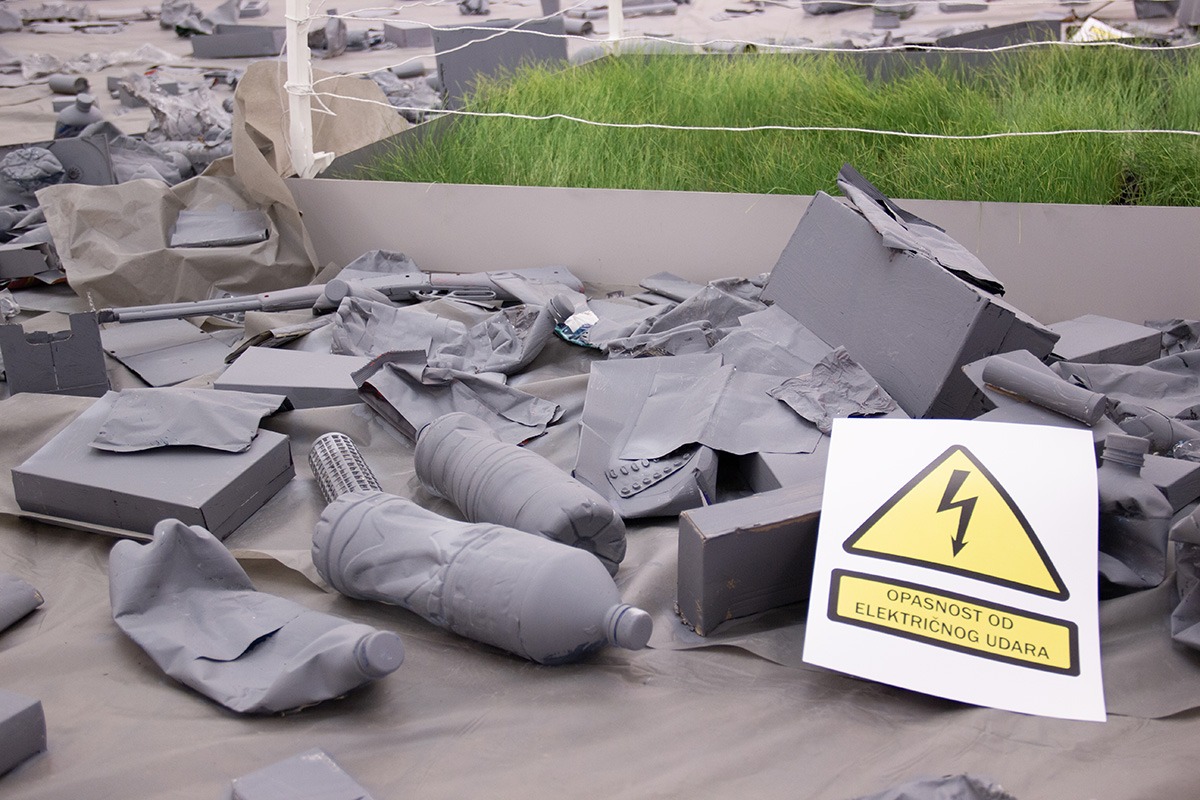
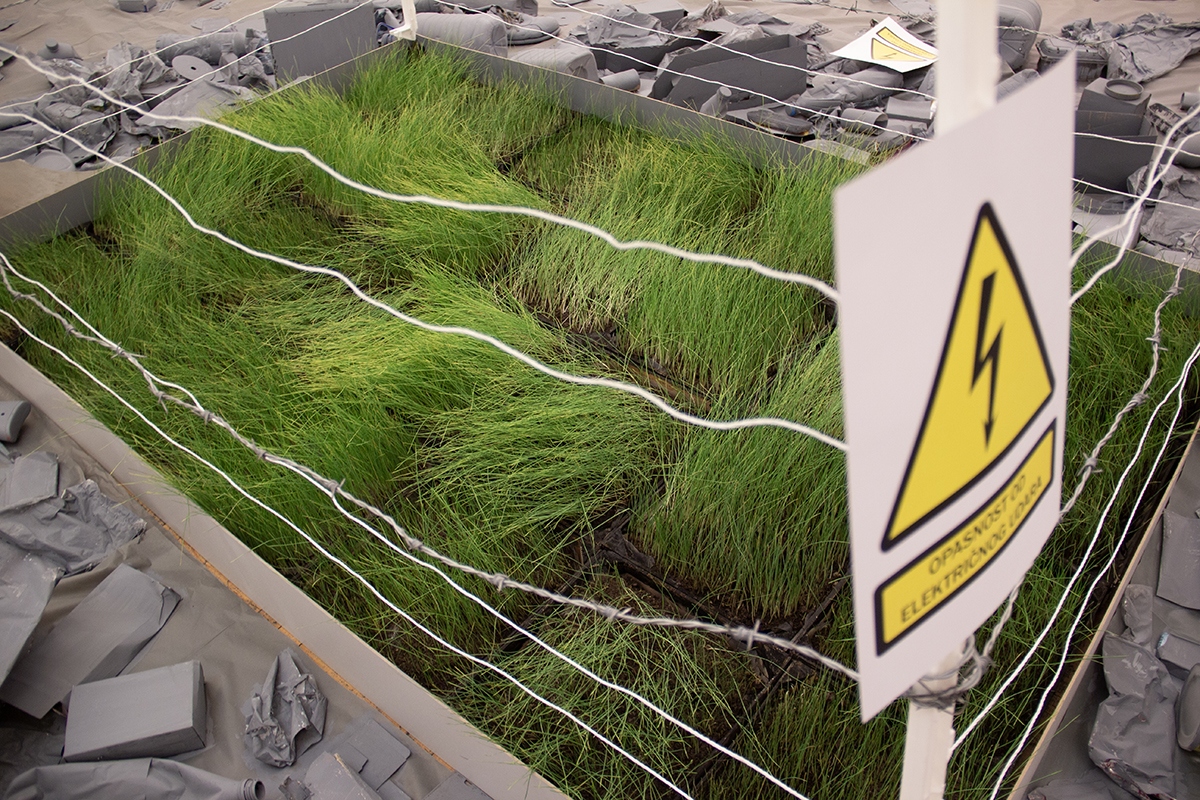
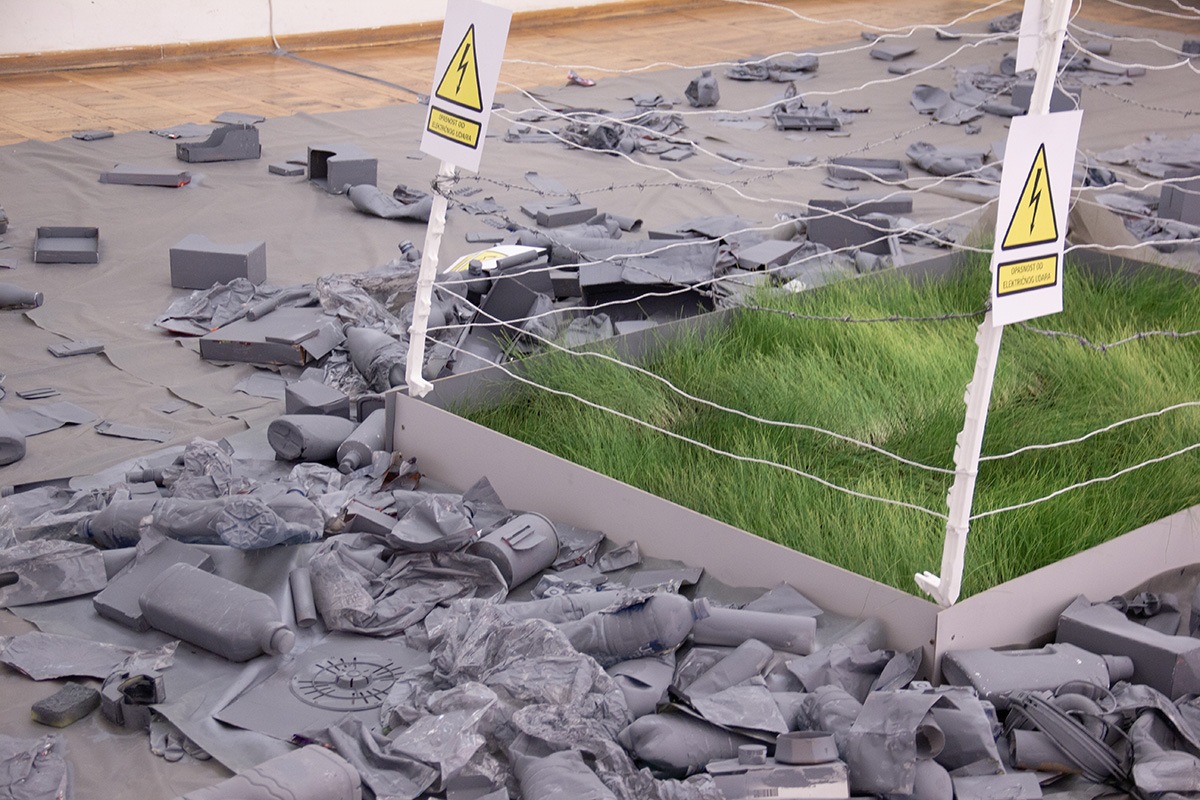
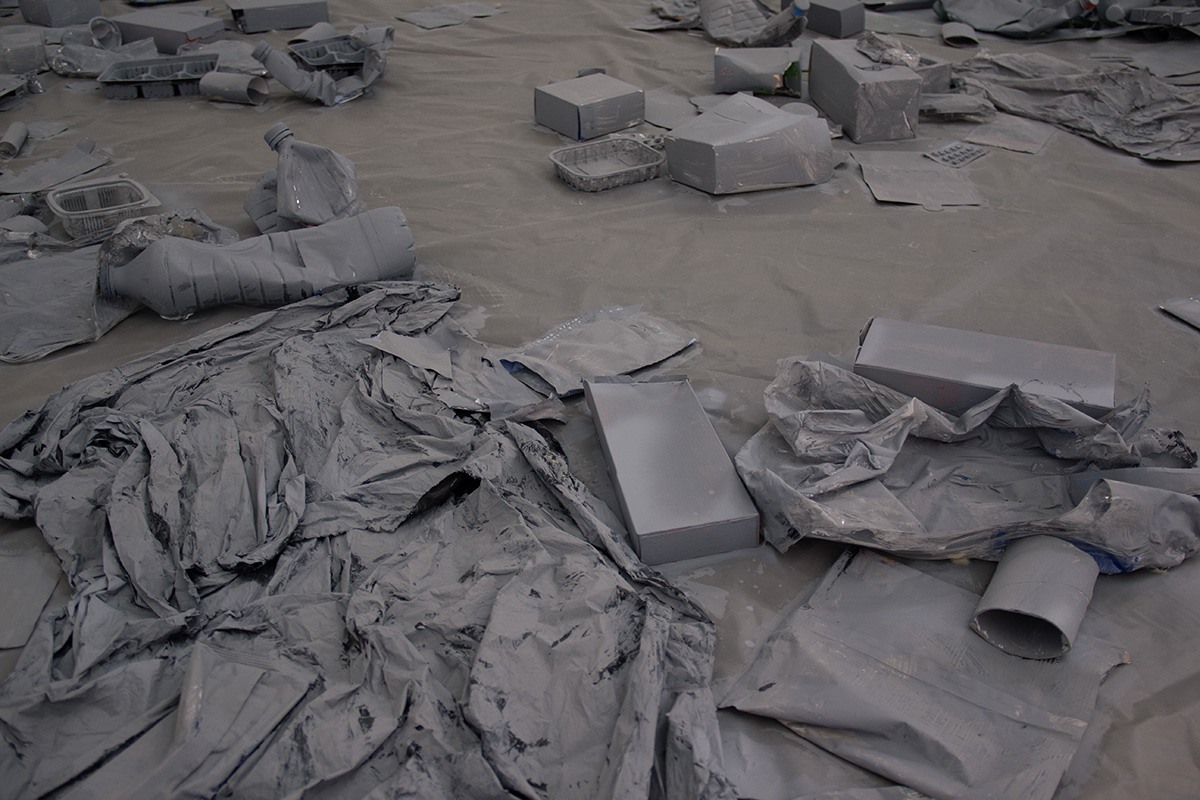
The name of the project “The Garden of Earthly Delights or The Damned Yard” combines titles of two artworks that marked different artistic fields. The painting “The Garden of Earthly Delights” is a part of the famous triptych by Hieronymus Bosch representing Eden, while the novel “The Damned Yard” by Ivo Andric depicts the isolation and restrictions of prison life.
The project is a depiction of a dystopia that the world is already rushing towards, facing the first signs of climate change, while catastrophic consequences await humanity in the very near future.
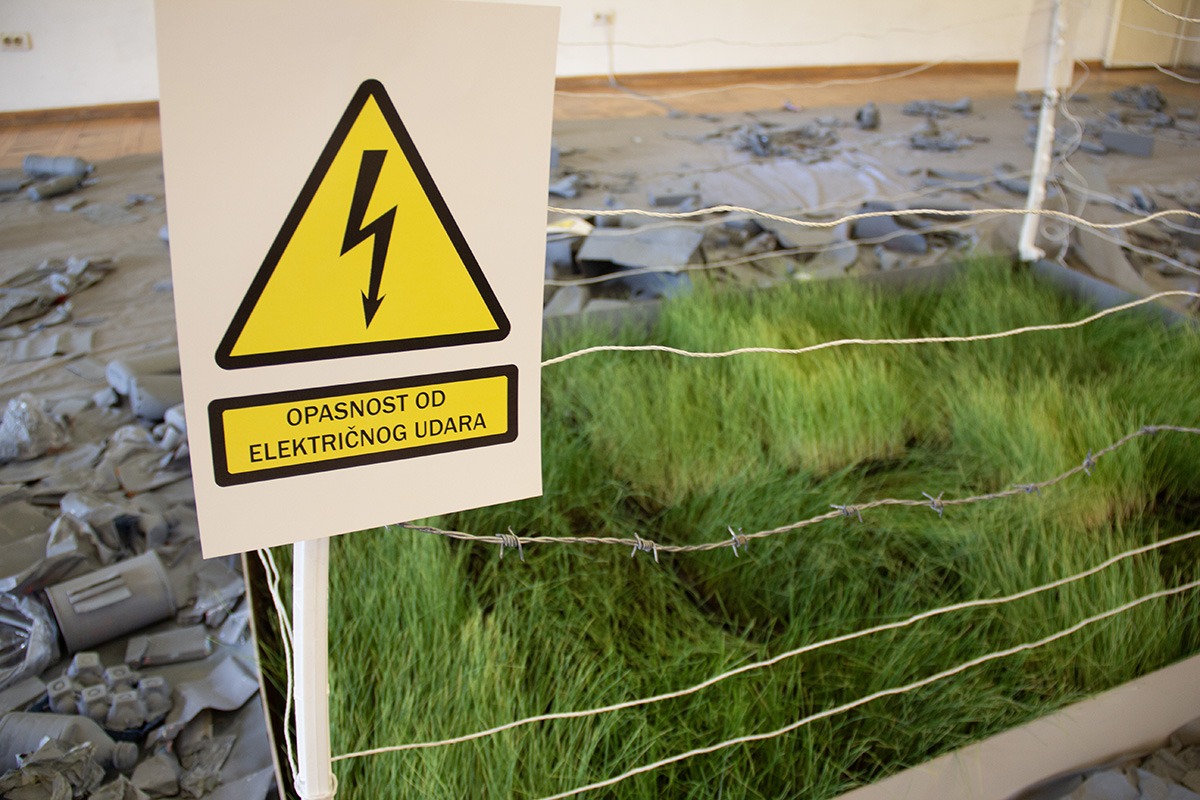
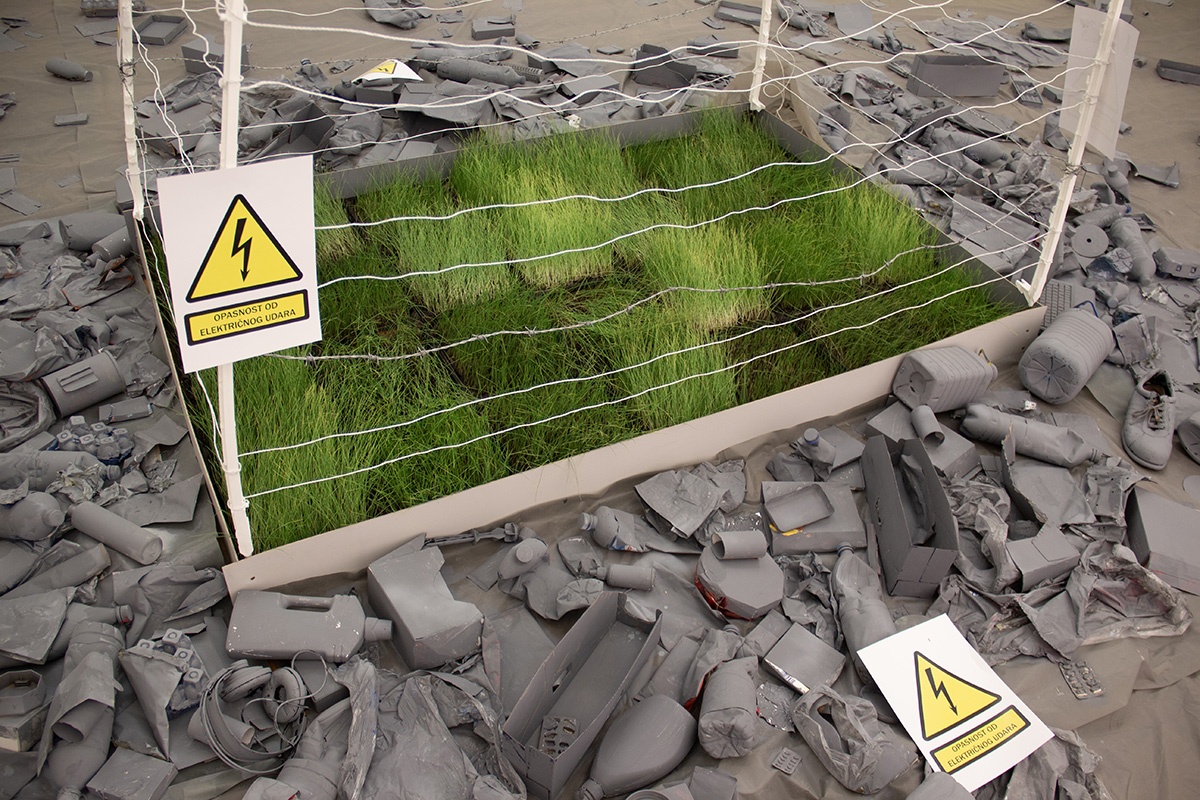
The polluted, barren land is represented through waste—the remnants of human civilization, which, through relentless hyper-production and consumption and the excessive exploitation of natural capacities, deadens everything in its path. According to Yuval Noah Harari (Sapiens: A Brief History of Humankind, Biblioner, Belgrade 2014, pp. 73–74), wheat is one of the most successful plants in all of history. Its cultivation began 10,000 years ago, and today it remains, to a large extent, the foundation of human nutrition. Enclosed by an electric fence and monitored by surveillance cameras, it points to new social divisions and struggles over the remaining, strictly guarded resources and territories suitable for life. According to Slavoj Žižek (Violence, Ljevak, Zagreb, May 2008, p. 29), those who are essentially responsible for creating a devastated and polluted world are fleeing from everything bad they have done, living in fenced communities, eating organic products, and spending vacations in nature reserves.
The audio moment—the frequency of the Earth (OM)—in this exhibition emphasizes the final phase of hyper-consumerist society, where the accumulated problems of pollution and depleted resources are not being resolved. Instead, the focus shifts to purchasing products that promise the ultimate goals of health, youth, and beauty. In this way, the vicious cycle of consumption only continues, sustained by the satisfaction of new, often fabricated, needs.

